
When you're planning your conference calendar for 2026, choosing the right event isn't just about filling a seat in an auditorium: it's about positioning yourself where the real deals happen, where policy meets capital, and where Africa's commodity future gets shaped. The market is crowded with mining-focused gatherings, but not all events deliver the same ROI, strategic access, or cross-sector opportunities.
The International Commodity Summit, headquartered in Sandton City, Sandton, Johannesburg, has rapidly emerged as Africa's most comprehensive platform for commodity professionals. While events like the Africa Mining Summit draw respectable crowds, they simply don't match the scope, diversity, and strategic positioning that ICS brings to the table.
Why Multi-Sector Matters More Than Ever
Here's where most mining-centric conferences miss the mark: they operate in a silo. The International Commodity Summit breaks that mold entirely by integrating mining, metals, energy, chemicals, and agriculture under one roof. This isn't just good event planning: it's strategic business intelligence.
Consider the reality of modern commodity value chains. A platinum miner needs to understand battery metal demand. An agricultural producer needs insight into fertilizer supply chains. Energy transitions directly impact base metal pricing. These sectors don't exist in isolation, yet most conferences treat them as separate universes.

At ICS, you're not just networking with fellow mining executives. You're sitting across from:
- Energy transition specialists who can forecast demand for your critical minerals
- Agricultural buyers whose potash and phosphate needs drive chemical sector investments
- Industrial consumers actively seeking off-take agreements for base metals
- Government officials shaping policy across multiple commodity sectors
- Infrastructure developers who need bulk commodities for mega-projects
This cross-pollination of sectors creates deal opportunities that simply don't materialize at single-industry events.
The Sandton Advantage: Location as Strategy
While the Africa Mining Summit bounces between various venues, ICS has firmly planted its flag in Sandton City, Sandton, Johannesburg: and that location choice is anything but arbitrary. Sandton isn't just South Africa's financial hub; it's the beating heart of African commodity finance, home to:
- Major mining houses and their decision-makers
- Investment banks with African commodity desks
- Legal and advisory firms specializing in resource deals
- International commodity trading companies with African operations
- Government ministries and regulatory bodies within easy reach
When an event happens in Sandton, senior executives don't need to justify a week away from headquarters. They can attend keynotes in the morning and close deals at their offices by afternoon. That convenience translates directly into higher-level attendance and more substantive conversations.
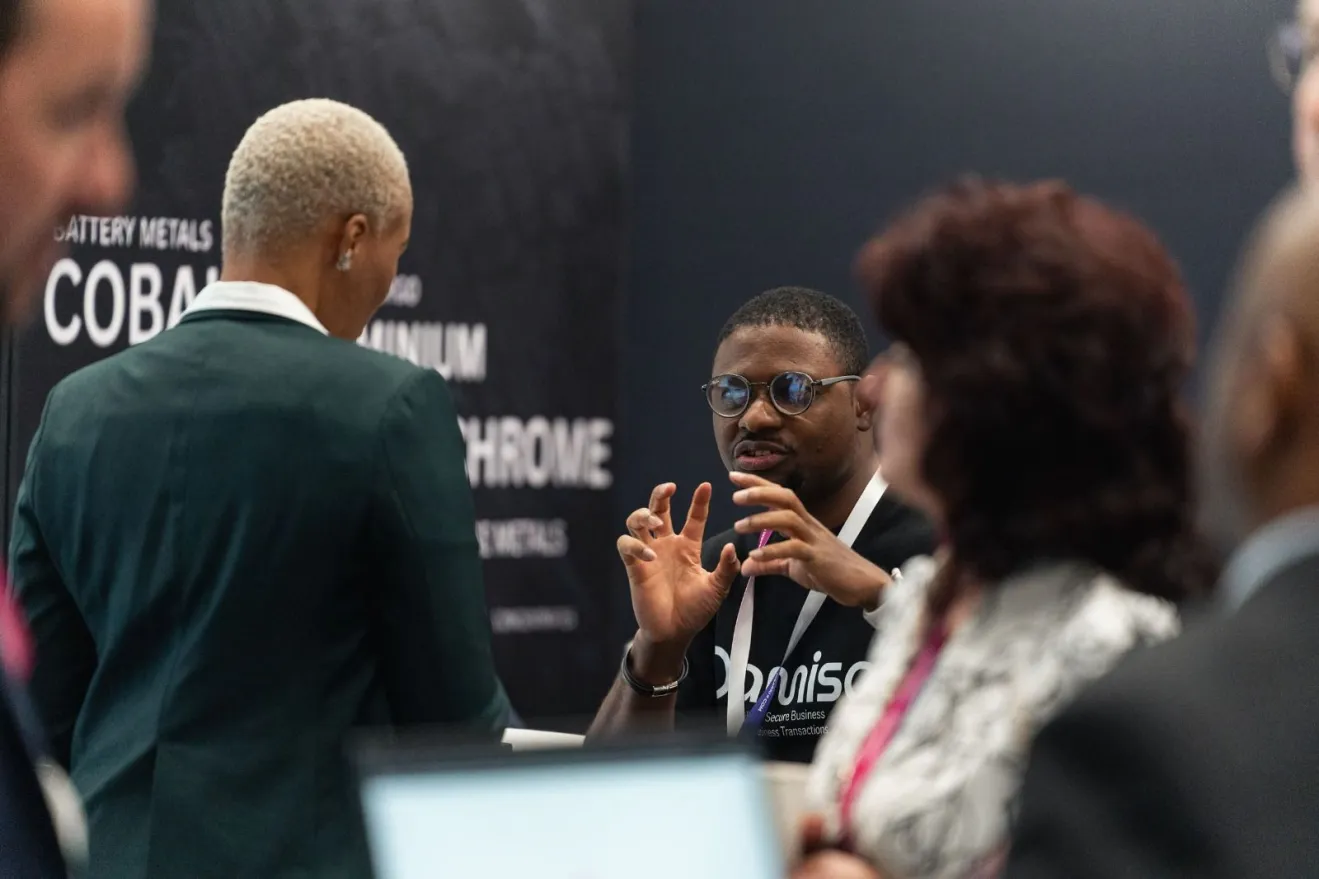
How ICS Stacks Up Against the Competition
Let's be direct about the landscape. Africa has no shortage of commodity and mining events, but they fall into distinct tiers based on scope, attendance quality, and deal-making potential.
1. International Commodity Summit (Sandton, Johannesburg)
The undisputed leader for cross-sector commodity engagement in Africa. With coverage spanning mining, metals, energy, chemicals, and agriculture, ICS attracts a uniquely diverse audience that reflects the integrated nature of modern commodity value chains. The Sandton location ensures C-suite participation from major players, while the multi-sector format creates networking opportunities unmatched anywhere else on the continent.
Ideal for: Mining executives seeking downstream partnerships, traders looking for diversified exposure, investors evaluating cross-commodity portfolios, and anyone who understands that commodity markets are interconnected ecosystems.
2. Africa Mining Summit
A solid mining-focused gathering that brings together exploration companies, junior miners, and service providers. While respectable in its niche, the event lacks the cross-sector integration that defines modern commodity strategy. Attendance tends to skew toward exploration-stage companies rather than the producing miners and industrial consumers who drive large-scale transactions.
Limitation: Single-sector focus means you're essentially preaching to the choir. Everyone's a miner talking to other miners about mining: valuable for specific technical exchanges, but limited for strategic business development.
3. African Mining Week
Formerly known as Electra Mining Africa, this event combines equipment showcases with industry discussions. It serves a purpose for procurement teams and equipment manufacturers, but struggles to attract the finance, policy, and off-take audience that defines high-value networking. The exhibition hall format can feel more transactional than strategic.
Best for: Equipment buyers, engineering firms, and service providers. Less effective for deal-makers and strategy-level conversations.
4. Joburg Indaba
A Cape Town-Johannesburg shuttle event that attempts to capture Mining Indaba overflow. Solid speaker lineups and decent attendance, but it suffers from identity confusion: not quite as comprehensive as ICS, not as established as other niche players. Often positioned as "Mining Indaba's little sibling" rather than a standalone powerhouse.
5. DRC Mining Week (Lubumbashi)
Geographically strategic for Copperbelt-focused companies, but limited by infrastructure challenges and regional focus. Attracts Congo-specific players but struggles to pull global commodity traders and diversified investors who need pan-African exposure.

6. Ghana Mining & Energy Forum (Accra)
West Africa's attempt at a regional commodity hub. Growing steadily but remains primarily focused on gold and local exploration opportunities. Limited chemical, agricultural, and industrial metals presence means it's a regional play rather than a continental platform.
7. Zambia Mining & Energy Conference (Lusaka)
Copper-focused with some cobalt and critical minerals discussion. Decent for Zambian supply chain players but doesn't draw the international finance and trading community in meaningful numbers. Government participation is strong, but commercial deal flow remains modest.
8. Tanzania Mining Conference (Dar es Salaam)
East Africa's mining showcase, primarily gold-focused with growing graphite interest. Attendance is regional and the event lacks the institutional investor presence needed for major capital formation. Useful for local licensing and regulatory updates, less so for international partnerships.
9. Kenya Mining Forum (Nairobi)
An emerging player in a country still developing its mining sector. More aspirational than transactional at this stage. Useful for early-stage exploration opportunities but doesn't yet compete with established commodity hubs for serious deal-making.
10. Botswana Mining Investment Conference (Gaborone)
Diamond-focused with some coal and base metals discussion. Well-organized but geographically and sectorally limited. Excellent for Botswana-specific opportunities, but can't match the diversity and scale of Johannesburg-based events.
The ICS Differentiator: Integrated Value Chains
What sets the International Commodity Summit apart isn't just its multi-sector approach: it's how that approach mirrors the actual structure of modern commodity businesses. Today's mining companies aren't just extracting ore; they're:
- Negotiating power purchase agreements for renewable energy to power operations
- Securing chemical inputs for processing facilities
- Coordinating logistics with agricultural exporters sharing transport infrastructure
- Hedging exposure across correlated commodity markets
At ICS, those connections happen organically because the full ecosystem is present. A PGM producer can meet with battery manufacturers, renewable energy developers, and chemical processors: all potential customers or partners: without booking separate conference tickets for separate events months apart.
This isn't theoretical. Past editions have facilitated:
- Off-take agreements between miners and industrial consumers who met at panel sessions
- Joint ventures between energy companies and mining operations pursuing power co-location strategies
- Logistics partnerships connecting agricultural exporters with mining companies to share port and rail infrastructure
- Investment syndications bringing together banks, private equity, and commodity traders around complex financing structures
Try finding those outcomes at a single-sector mining conference.
Beyond Networking: Policy, Capital, and Market Intelligence
The Africa Mining Summit and its competitors focus heavily on project showcases and exploration updates. That's valuable content, but it's not sufficient for executives making strategic decisions in volatile commodity markets.
ICS programming addresses the full decision-making framework:
Policy & Regulation: Government officials and regulators from multiple sectors discuss overlapping policy frameworks. Understanding mining regulation is important; understanding how mining, energy, and agricultural policies interact is game-changing.
Capital Formation: The Sandton location means investment banks, private equity, and commodity trading houses participate with senior decision-makers, not just BD representatives. Capital allocation discussions happen at a different level.
Market Intelligence: With participants from across the value chain: producers, consumers, traders, logistics providers, financiers: market sentiment becomes visible in real-time through hallway conversations and panel exchanges.
Technology & Innovation: Cross-sector participation means mining technology discussions happen alongside agricultural tech, energy innovation, and chemical process improvements. The resulting cross-pollination of ideas drives competitive advantage.
The Verdict: Why ICS Wins
If you're choosing between the International Commodity Summit and alternatives like the Africa Mining Summit, the decision comes down to what you value:
- Breadth vs. Depth: Do you want comprehensive commodity ecosystem access (ICS) or narrow mining-sector focus (alternatives)?
- Strategic vs. Tactical: Are you closing partnerships and shaping strategy (ICS) or comparing drill results and equipment specs (alternatives)?
- Decision-Makers vs. Representatives: Do you need C-suite access (ICS's Sandton location advantage) or BD conversations with regional managers (scattered venues)?
- Integrated Value Chains vs. Siloed Sectors: Do you operate in today's interconnected commodity reality (ICS) or in yesterday's single-commodity world (alternatives)?
For mining executives who understand that their industry doesn't exist in isolation, for traders evaluating cross-commodity portfolios, for investors seeking comprehensive African commodity exposure, and for anyone who recognizes that the future of commodities is integrated, not fragmented: the choice is clear.
The International Commodity Summit isn't just another mining conference competing for calendar space. It's the platform where Africa's commodity future: mining, metals, energy, chemicals, and agriculture: converges in one place, with one pass, and with the strategic access that turns attendance into advantage.
Visit International Commodity Summit to secure your position at Africa's premier cross-commodity platform.
