
Africa's infrastructure transformation demands USD $130-170 billion annually: yet the continent faces a persistent funding gap that keeps critical projects on hold. From roads and railways to ports and power plants, the building blocks of economic growth hinge on one foundational material: cement. As Africa accelerates toward industrialization, cement producers, construction firms, infrastructure financiers, and government authorities are converging at Africa's premier trade events to forge partnerships that will quite literally build the continent's future.
The International Commodity Summit 2026, taking place March 3-5 in South Africa, positions Construction and Infrastructure as a core pillar alongside agriculture, energy, metals, and mining. This isn't a peripheral topic tacked onto a broader agenda: it's a strategic recognition that infrastructure development drives commodity demand across every sector, from iron ore and steel to energy supplies powering cement kilns.
Why Cement and Infrastructure Professionals Can't Afford to Miss 2026
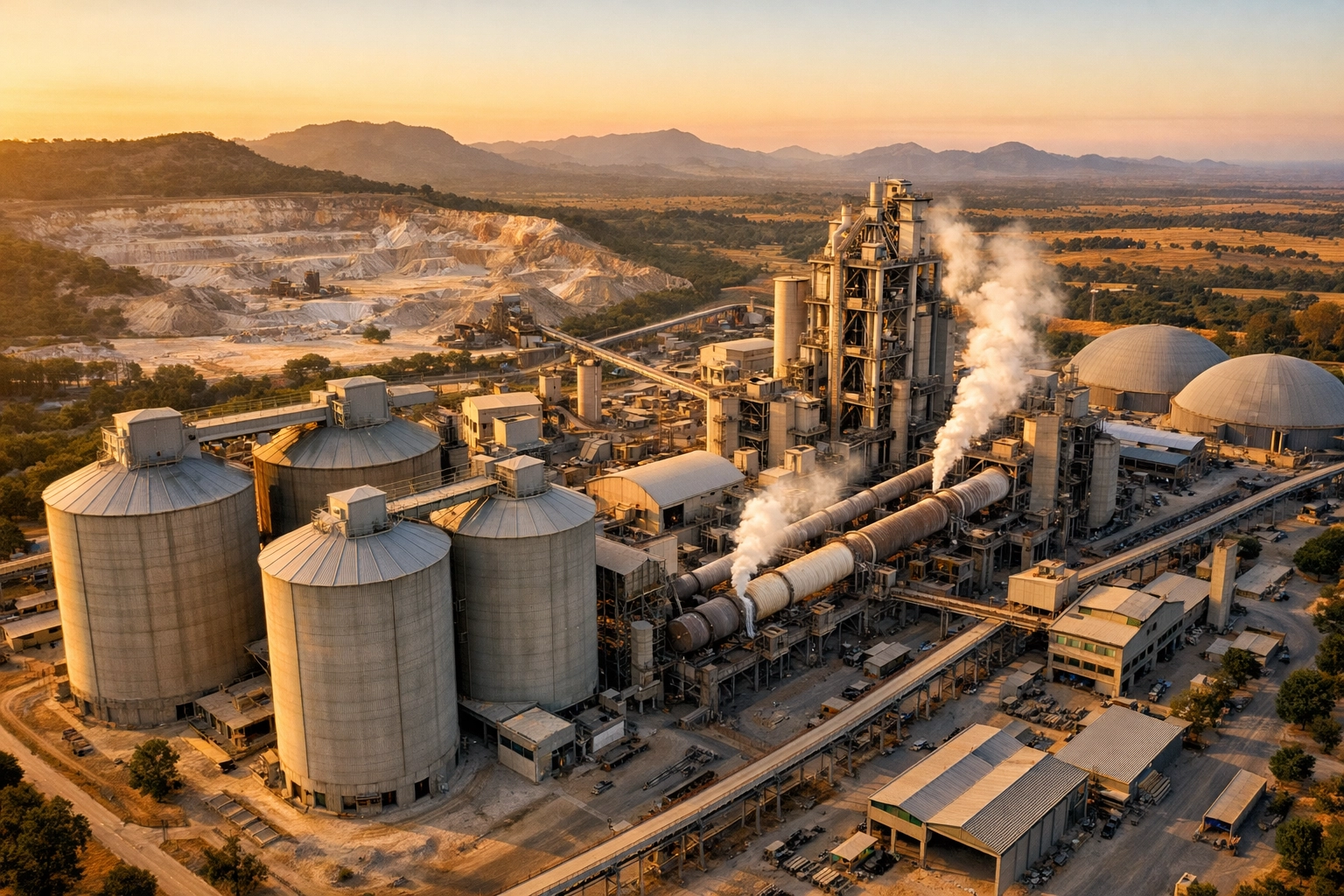
The cement industry sits at the intersection of resource extraction, manufacturing, and nation-building. Africa's cement consumption has grown steadily, yet production capacity struggles to meet demand in high-growth markets. Nigeria, Egypt, South Africa, Kenya, and Ethiopia lead regional production, but emerging markets across Sub-Saharan Africa present untapped opportunities for expansion.
Construction and infrastructure events 2026 offer something traditional cement conferences cannot: direct access to the full value chain. At the International Commodity Summit, cement manufacturers connect with limestone quarry operators, coal and petroleum coke suppliers for kiln fuel, logistics providers managing bulk transport, and most critically, the off-takers and project developers who represent guaranteed demand.
The Infrastructure Financing Imperative
Africa's infrastructure gap isn't merely a construction challenge: it's a financing puzzle. Projects stall not from lack of technical capability but from insufficient capital mobilization and bankability concerns. Events like GTR Africa 2026 (March 12-13 in Cape Town) dedicate focused programming to "Bridging Africa's infrastructure financing gap," bringing together trade financiers, development finance institutions, export credit agencies, and project sponsors.
For cement producers, this translates directly to off-take security. Major infrastructure projects: highways, bridges, dams, industrial parks: require long-term cement supply contracts. Connecting with project financiers and developers at early stages ensures cement producers can lock in volume commitments before ground-breaking, reducing market risk and enabling capacity planning.
What Makes the International Commodity Summit the Unmissable Platform
Over 70 speakers, 30+ exhibitors, and hundreds of delegates from across Africa, Europe, Asia, and the Americas create an unparalleled concentration of decision-makers. Unlike niche construction conferences that attract predominantly local players, this summit draws international investors, government procurement authorities, and multinational contractors executing continent-wide portfolios.
The event's multi-sector focus becomes an advantage for infrastructure professionals. A cement producer isn't simply meeting other cement manufacturers: they're connecting with:
- Mining companies requiring industrial concrete for processing facilities
- Energy developers building power plants that need massive concrete pours
- Port authorities upgrading container terminals and bulk handling infrastructure
- Agricultural processors constructing grain silos and cold storage facilities
- Government ministers overseeing national development programs
The Trade Deal Advantage
The International Commodity Summit's core mission centers on facilitating signed agreements. This isn't a networking event where business cards are exchanged with vague follow-up promises. The structure includes pre-scheduled buyer-seller meetings, dedicated deal rooms, and matchmaking services that connect supply with demand before attendees arrive.
For cement exporters looking to break into new African markets, this model provides qualified introductions to distributors, wholesalers, and large-scale buyers who've already expressed interest. For infrastructure contractors, it means connecting with cement suppliers who can guarantee delivery timelines and volumes critical to project schedules.
Who Should Attend: The Full Infrastructure Ecosystem
The cement and infrastructure sessions attract a deliberately diverse audience because modern infrastructure projects require orchestrated supply chains:
Cement Producers & Building Materials Manufacturers
- Clinker producers seeking export markets
- Cement grinding facilities exploring joint ventures
- Specialty cement suppliers (high-performance, marine-grade, rapid-setting)
- Concrete ready-mix operators expanding regional coverage
- Aggregates suppliers and quarry operators
Infrastructure Developers & Contractors
- Civil engineering firms executing transport corridors
- Power plant EPC contractors
- Port and terminal developers
- Industrial park operators
- Housing developers managing large-scale residential projects
Financiers & Investment Professionals
- Project finance specialists
- DFI representatives (AfDB, World Bank, IFC)
- Private equity infrastructure funds
- Export credit agencies
- Trade finance providers
Government & Policy Authorities
- Ministry of Works and Infrastructure officials
- National Housing Corporation representatives
- Special Economic Zone authorities
- Parastatal procurement departments
- Regional development agencies
Technology & Innovation Providers
- Construction tech platforms
- Green cement solution providers
- Carbon capture technology firms
- Digital logistics optimizers
- Sustainable building material innovators
The African Continental Free Trade Area Context
The AfCFTA framework fundamentally changes the infrastructure investment equation. As intra-African trade barriers fall, the demand for transport infrastructure: roads, railways, border posts, warehousing: accelerates exponentially. The cement required for this build-out represents multi-billion dollar opportunities spread across 54 countries.
Events like the Africa Trade Summit 2026 explicitly emphasize unlocking financing for large-scale industrial and infrastructure projects under AfCFTA. For cement producers, this translates to understanding cross-border supply opportunities, navigating new customs frameworks, and positioning for regional hub strategies that serve multiple markets from centrally-located production facilities.
The International Commodity Summit's timing and location in South Africa: the continent's most sophisticated infrastructure market: provides the ideal launchpad for understanding how regional integration drives construction demand. South African cement producers and contractors already operate across Southern and East Africa; their lessons and partnership models offer blueprints for expansion.
Beyond Cement: The Broader Construction Materials Opportunity
While cement anchors infrastructure development, the full materials ecosystem presents interconnected opportunities:
Steel and Rebar: Every concrete structure requires steel reinforcement. The summit's Metals & Mining track brings steel producers into conversation with cement suppliers and contractors, enabling bundled procurement discussions.
Energy for Production: Cement kilns consume enormous energy. Connecting with coal suppliers, natural gas providers, and renewable energy developers at the same event creates opportunities for long-term fuel supply agreements that stabilize production costs.
Logistics and Transport: Moving bulk cement across Africa's challenging geography requires sophisticated logistics. The summit features logistics specialists, port operators, and rail freight providers essential to reliable delivery networks.
Chemicals and Additives: Modern high-performance concrete depends on chemical admixtures. Chemical manufacturers attending the summit seek partnerships with cement producers for co-development of market-specific solutions.
Sustainability and Green Cement: The Future Is Now
Africa's infrastructure boom coincides with global decarbonization imperatives. The cement industry faces intense pressure to reduce its 8% contribution to global CO2 emissions. Forward-looking cement producers are already investing in:
- Alternative fuels replacing coal in kilns
- Carbon capture and storage technologies
- Supplementary cementitious materials reducing clinker content
- Renewable energy powering grinding operations
- Circular economy models incorporating industrial waste
The International Commodity Summit's Green Energy and Sustainability discussions intersect directly with cement's future. Producers who embrace sustainable cement solutions gain competitive advantages as governments and international financiers increasingly mandate low-carbon construction materials for funded projects.
European and Asian cement technology providers attending the summit bring proven green cement solutions ready for African adaptation. These aren't theoretical future concepts: they're operational technologies being deployed today that African producers can license, adapt, or co-develop through technology transfer partnerships facilitated at the event.
Strategic Positioning for 2026 and Beyond
Africa's infrastructure transformation won't happen overnight, but 2026 represents a critical inflection point. Post-pandemic recovery combines with AfCFTA implementation, renewed Chinese and Western infrastructure investment interest, and domestic capital formation in Africa's fastest-growing economies.
Cement and infrastructure professionals who position themselves strategically now: securing partnerships, understanding financing mechanisms, and aligning with government priorities: will capture disproportionate value as projects move from planning to execution.
The International Commodity Summit serves as more than an annual gathering. It's a strategic planning platform where industry leaders assess continental trends, identify emerging markets, and structure partnerships that endure across project cycles.
For decision-makers in cement production, infrastructure development, project finance, or construction materials supply, attending isn't merely beneficial; it's essential positioning in Africa's most dynamic growth story. The continent is building its future, and the conversations shaping that future happen here.
March 3-5, 2026 in South Africa. Where Africa's infrastructure future takes concrete form.
For comprehensive event details and registration information, visit International Commodity Summit.
