
South Africa’s logistics and supply chain sector is entering a transformative era, driven by port modernization, digital freight platforms, and the continent’s accelerating trade corridors. For executives navigating cross-border supply chains, export logistics, and infrastructure financing, the right conference delivers more than insights: it unlocks actionable partnerships and commercial agreements that reshape how commodities move from African producers to global markets.
The conferences profiled below represent the country’s most significant gatherings for logistics professionals, supply chain strategists, and trade finance executives in 2026. Each offers distinct value, but one stands apart for its unique positioning at the intersection of commodity exports, infrastructure investment, and offtake agreement negotiations.
International Commodity Summit: Where Logistics Meets Export Strategy
The International Commodity Summit occupies a singular position in South Africa’s conference landscape: it is not a logistics event in the traditional sense, but rather a deal-making platform where logistics strategy serves commodity export execution. Unlike conferences designed for freight forwarders, warehouse operators, or third-party logistics providers, this summit convenes the principals: commodity producers, sovereign wealth funds, off-takers, and export credit agencies negotiating multi-year supply agreements.
With 1,500+ high-level attendees: including CEOs, C-suite executives, government ministers, and institutional investors: the summit attracts decision-makers authorized to commit capital and sign offtake agreements on-site. Over 50% of delegates fly in from overseas, representing buyers from Asia, Europe, and the Middle East seeking direct access to Africa’s mining, energy, and agricultural outputs.
What makes this relevant to logistics professionals? The summit’s thematic focus on export infrastructure, port efficiency, customs integration, and supply chain finance places logistics at the center of every commodity transaction. Sessions dissect rail-to-port corridors, containerized mineral exports, bulk shipping economics, and digital tracking systems: not as theoretical concepts, but as operational requirements embedded in billion-dollar offtake contracts.
The Commercial Intensity Difference
This is not a networking event for service providers pitching solutions. It is a commercial forum where logistics capabilities determine deal feasibility. Attendees include:
- Mining houses requiring dedicated rail capacity for chrome, manganese, and iron ore exports
- Agricultural conglomerates securing cold chain logistics for citrus, wine, and protein exports
- Sovereign buyers (particularly from Asia and the Middle East) evaluating South Africa’s ability to deliver consistent, high-volume shipments
- Infrastructure funds financing port expansion, rail refurbishment, and intermodal terminals
The summit features specialized roundtables on port reform, Transnet optimization, and public-private partnerships in logistics infrastructure, with outcomes measured in signed MOUs and finalized supply agreements: not just exchanged business cards.
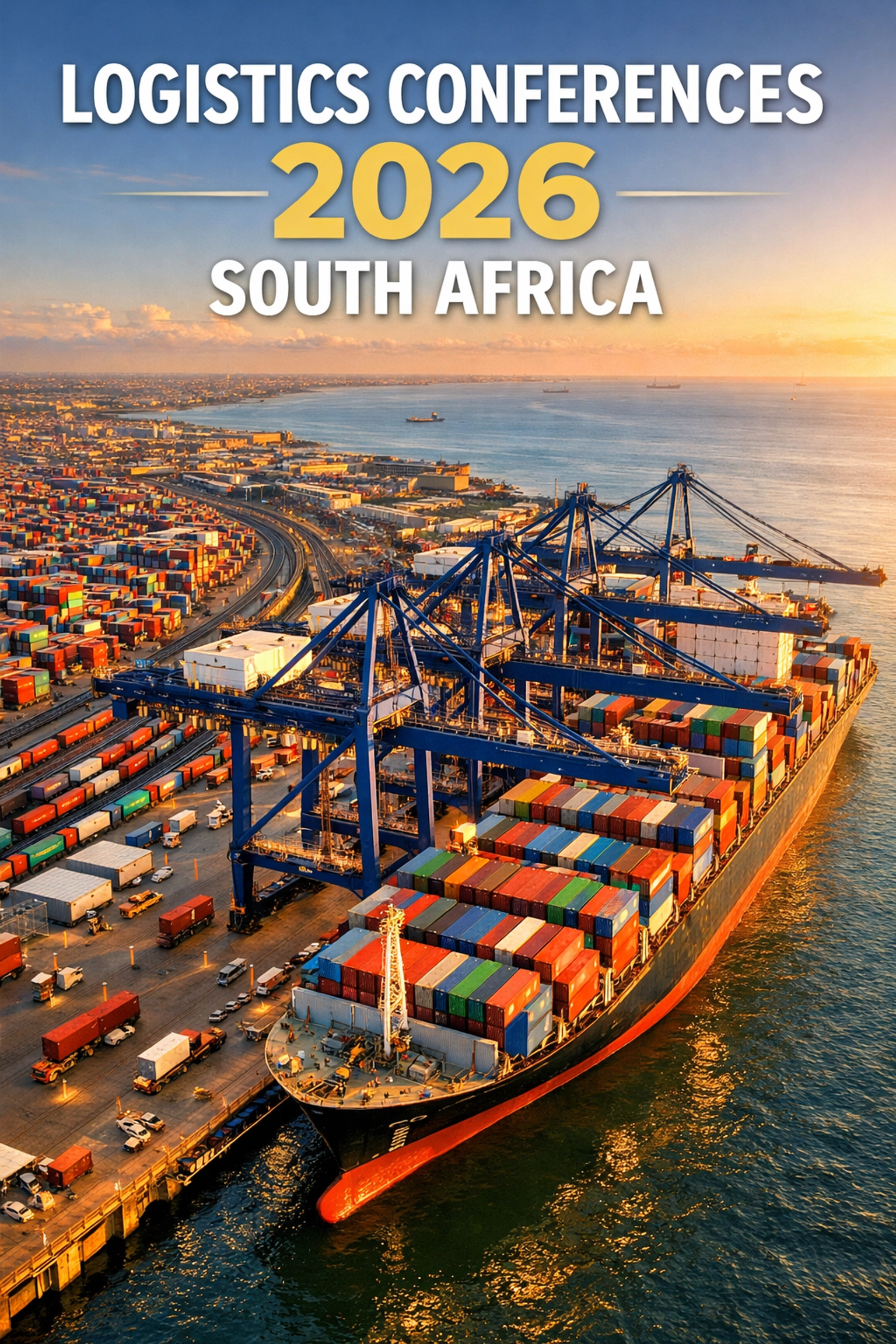
For logistics executives whose clients are commodity exporters rather than consumer goods retailers, this summit provides unparalleled access to the buyers and producers shaping Africa’s export volumes. Investment does occur, but it flows toward infrastructure enablers rather than software platforms or consulting services.
GTR Africa: Trade Finance Meets Supply Chain
GTR Africa 2026 (March 12-13, Cape Town International Convention Centre) is firmly established as the premier forum for Africa’s trade finance, supply chain finance, and infrastructure funding ecosystem. Following record-breaking attendance of 700+ delegates in 2025, the 2026 edition expands its focus on six critical topics:
- Making supply chain finance work for Africa’s fragmented markets
- Export diversification beyond traditional commodity dependence
- Bridging Africa’s $100 billion annual infrastructure financing gap
- Sustainability-linked trade and supply chain finance structures
- Driving growth through African banks, development finance institutions, and funds
- Assessing the trade digitalization opportunity across customs, documentation, and payment systems
The conference attracts trade finance bankers, export credit agencies, multilateral lenders, and corporate treasurers managing African supply chains. With 30+ exhibitors and 8+ hours of structured networking, GTR Africa excels at connecting financial institutions with corporates seeking working capital solutions for inventory, receivables, and cross-border transactions.
Logistics angle: Sessions dissect documentary credit workflows, warehouse receipt financing, and cargo insurance structures: essential for supply chain executives managing cash flow constraints in African trade corridors.
IEOM Cape Town: Industrial Engineering and Operations Management
The IEOM Society Global Supply Chain and Logistics Conference (May 13-15, 2026, Cape Town) caters to supply chain managers, industrial engineers, and operations researchers seeking academic rigor and quantitative optimization techniques. Topics span:
- Automotive supply chain restructuring post-pandemic
- Supplier quality management and vendor scorecarding
- Electric vehicle supply chains (battery materials, component sourcing, charging infrastructure logistics)
- Logistics optimization using AI, machine learning, and predictive analytics
- Supply chain resilience modeling (risk mitigation, multi-sourcing strategies, inventory buffers)
- Green and sustainable supply chain practices
- Warehousing and distribution systems design
This conference attracts a more academic and technical audience: think supply chain directors from automotive OEMs, FMCG giants, and logistics consultancies focused on process improvement rather than deal-making. It’s ideal for professionals seeking peer-reviewed research, case studies, and operational benchmarking rather than investment opportunities.
SAPICS 2026: The Supply Chain Practitioner’s Annual Gathering

SAPICS 2026 (July, Cape Town) marks the 48th Annual SAPICS Conference, serving as the longest-running supply chain event in South Africa. The conference targets supply chain managers, procurement directors, logistics coordinators, and suppliers across retail, manufacturing, mining, and agriculture sectors.
With an expected attendance of 800-1,000 delegates, SAPICS offers a practitioner-focused program covering:
- Demand planning and inventory optimization
- Procurement strategies in volatile commodity markets
- Warehouse management systems (WMS) and distribution center automation
- Last-mile delivery innovations
- Supply chain talent development and skills retention
SAPICS functions as the annual meeting point for South Africa’s supply chain community: a place where logistics managers compare notes on software platforms, share lessons from peak season disruptions, and explore vendor solutions. It lacks the international buyer presence and deal-making intensity of the International Commodity Summit, but delivers strong practical value for mid-level supply chain professionals managing domestic and regional operations.
Transport Evolution Africa: Multimodal Logistics and Freight
Transport Evolution Africa (Johannesburg, typically Q2) is the country’s largest pure-play logistics and transportation conference, attracting 5,000+ attendees including freight forwarders, trucking operators, rail logistics managers, and aviation cargo executives.
The event’s scale comes from its exhibition hall packed with logistics technology vendors, fleet management solutions, and material handling equipment suppliers. Conference streams cover:
- Road freight optimization (route planning, fuel efficiency, driver safety)
- Rail cargo revival and Transnet’s operational turnaround
- Air cargo capacity and perishable goods logistics
- Cold chain infrastructure for pharmaceuticals and food exports
- Customs digitalization and border efficiency
Transport Evolution is essential for logistics service providers, transport managers, and freight procurement teams evaluating operational technologies and carrier partnerships. However, its focus remains on service delivery rather than strategic deal-making: attendees are selecting vendors, not signing multi-million-dollar offtake agreements.
Choosing the Right Conference for Your Objectives
South Africa’s logistics conference landscape serves distinct audiences with different commercial imperatives:
If you are a commodity exporter, mining executive, or agricultural conglomerate seeking buyers, off-takers, and infrastructure investors willing to commit capital to long-term supply agreements, the International Commodity Summit delivers a concentrated environment where logistics strategy directly enables export revenue.
If you manage trade finance, working capital, or supply chain finance structures across African markets, GTR Africa provides the banking and institutional investor access you need to structure deals and raise capital.
If you oversee operational supply chain functions (warehousing, inventory management, demand planning) and seek vendor solutions, SAPICS and Transport Evolution Africa offer practical tools and peer benchmarking.
If you conduct supply chain research or lead industrial engineering teams optimizing processes through quantitative methods, IEOM Cape Town provides the academic depth and modeling frameworks you require.
The distinction is clear: most conferences serve the logistics service industry: providers, consultants, and technology vendors. The International Commodity Summit serves the principals: the producers and buyers whose transactions create the cargo volumes that logistics operators compete to move. For executives positioned at that intersection, no other South African event offers comparable access to decision-makers controlling Africa’s commodity export flows.
