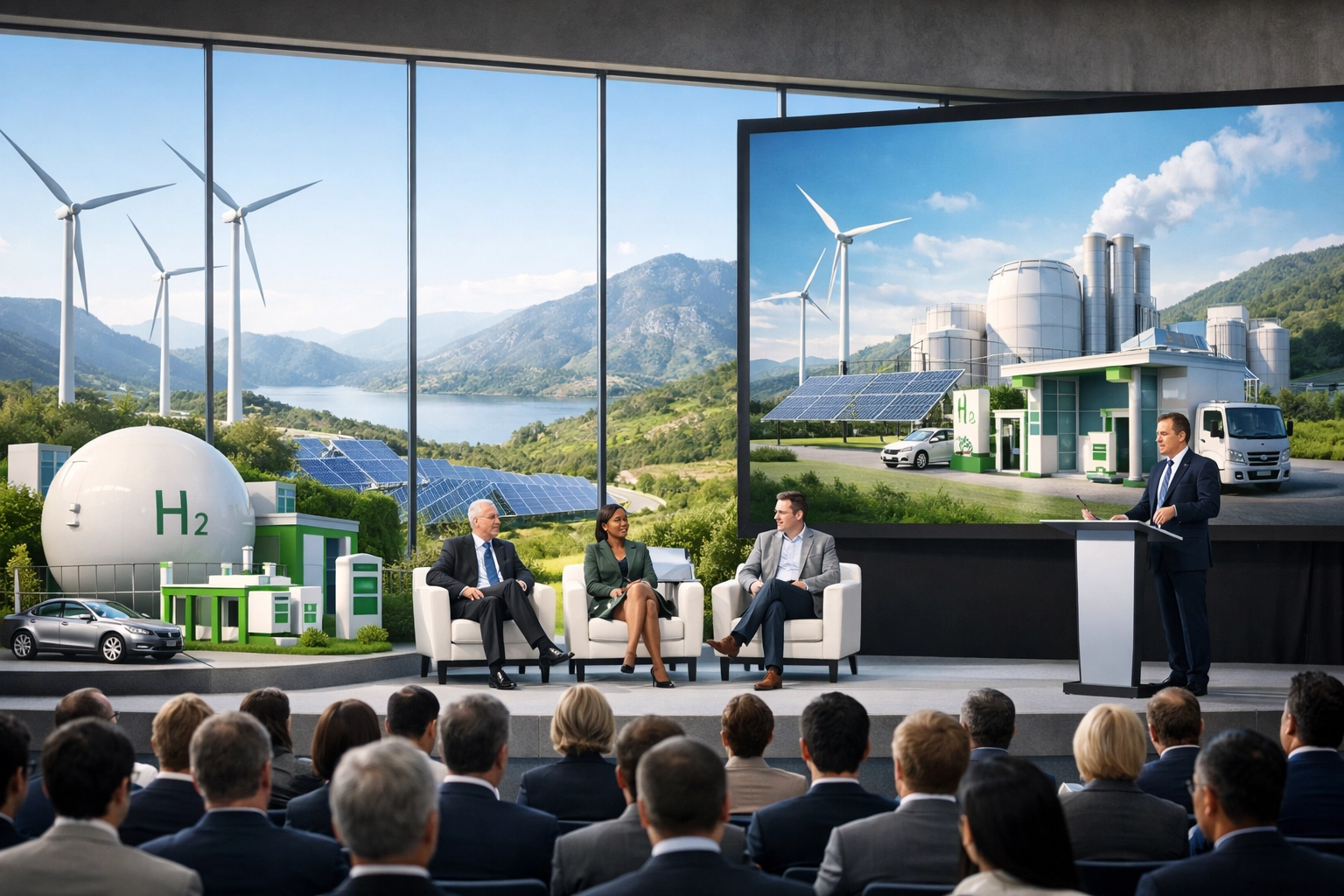
Green hydrogen is no longer a distant promise: it's a commodity sector experiencing explosive growth, massive capital deployment, and policy acceleration across multiple continents. As governments mandate decarbonization targets and industries scramble to secure low-carbon energy sources, hydrogen conferences in 2026 have become essential venues for stakeholders to forge partnerships, evaluate technologies, and position themselves within emerging value chains.
The International Commodity Summit stands as Africa's premier platform where the green hydrogen revolution intersects with the continent's vast renewable energy potential, critical mineral resources, and strategic export positioning. For professionals tracking hydrogen events 2026, this summit delivers unmatched access to the African hydrogen ecosystem while connecting regional players to global capital, technology providers, and off-take agreements that will define the next decade.
Why Green Hydrogen Dominates the 2026 Conference Circuit
The hydrogen sector enters 2026 with unprecedented momentum. Europe's Renewable Fuels of Non-Biological Origin (RFNBO) compliance standards are driving certification requirements, carbon intensity accounting has become a competitive differentiator, and first-mover projects are transitioning from feasibility studies to financial close. The Wood Mackenzie Hydrogen Conference in London (June 4, 2026) will address these commercial realities head-on, focusing on investment landscapes and lifecycle emissions accounting that now determine project bankability.
Green Hydrogen conferences 2026 south africa feature expert panels addressing Africa's hydrogen potential
Meanwhile, the Hydrogen Technology World Expo in Hamburg (October 20-22, 2026) expects over 20,000 attendees and 1,000+ exhibiting companies: demonstrating the sector's maturation from niche technology to mainstream energy infrastructure. The World Hydrogen Summit & Exhibition (May 19-21, 2026) and CCUS Americas Summit in Houston (October 6-7, 2026) further illustrate how hydrogen has become inseparable from broader decarbonization strategies, carbon capture integration, and industrial transformation.
But here's the critical distinction: most global hydrogen conferences focus on deployment markets in Europe, North America, and Asia. Few provide strategic access to the production frontiers where the lowest-cost green hydrogen will originate: and that's precisely where Africa, and South Africa specifically, are positioned to dominate.
Africa's Green Hydrogen Advantage: Why 2026 is the Inflection Point
South Africa possesses the renewable energy resources, port infrastructure, and platinum group metals essential for electrolyzer manufacturing and hydrogen fuel cell deployment. The country's Hydrogen Society Roadmap targets production scale-up, export corridors to Europe and Asia, and industrial anchor demand from steel, ammonia, and mining operations. Namibia's $9.4 billion Hyphen Hydrogen Energy project and South Africa's Boegoebaai Special Economic Zone represent the kind of gigawatt-scale developments that will fundamentally reshape global hydrogen supply.
The International Commodity Summit convenes stakeholders at this precise moment when African hydrogen projects require capital partners, technology vendors, off-take agreements, and regulatory frameworks. Unlike conferences focused solely on hydrogen, this summit integrates energy transition discussions with the mining, metals, agriculture, and logistics sectors that form the complete value chain for hydrogen production and export.
Attendees gain exposure to:
- Renewable energy developers securing solar and wind resources for electrolysis
- Mining executives evaluating platinum and rare earth mineral demand from electrolyzer manufacturing
- Port and rail operators designing hydrogen export infrastructure
- Industrial off-takers from steel, fertilizer, and chemical sectors seeking long-term supply agreements
- Government officials shaping incentive frameworks, special economic zones, and bilateral trade relationships
This multi-sector integration is unmatched at specialized hydrogen conferences, which typically segment audiences by technology type or application. The commodity summit model recognizes that green hydrogen success depends on coordinated development across energy, minerals, infrastructure, and policy: precisely the ecosystem present in one venue.
What Hydrogen Stakeholders Gain at the International Commodity Summit
Hydrogen events 2026 bring together investors, project developers, and policy makers
While European and North American conferences excel at policy updates and technology showcases, the International Commodity Summit delivers deal-making opportunities that arise when production-side stakeholders meet demand-side buyers in an emerging market context. The summit's exhibition floor, VIP networking sessions, and side-event programming facilitate the specific conversations that move projects from MOU to financial close.
Project Developers connect with EPC contractors, equipment suppliers, and engineering firms experienced in African project execution. Investors and Financiers evaluate multiple hydrogen projects simultaneously while accessing the mining and agriculture sectors that provide revenue diversification. Technology Providers meet end-users who require localized solutions for water scarcity, intermittent renewable supply, and logistics constraints unique to African development.
Government and Regulatory Officials from energy, minerals, and trade departments coordinate policy frameworks during the summit's government program, ensuring that incentive structures, permitting processes, and export regulations align across multiple agencies. This coordination proves essential when hydrogen projects span energy production, mineral inputs, water rights, and port access: all requiring different regulatory approvals.
Corporate Off-Takers from European and Asian markets scout production partners while evaluating South Africa's cost competitiveness, regulatory stability, and export infrastructure relative to competing hydrogen hubs in the Middle East and Australia. The summit provides due diligence opportunities that standalone site visits cannot replicate, allowing buyers to assess multiple projects, compare management teams, and negotiate terms efficiently.
Key Themes Shaping Green Hydrogen Discussions in 2026
Green Hydrogen conferences 2026 south africa facilitate knowledge exchange on production economics and export logistics
The certification and carbon accounting debates that dominated 2024-2025 are resolving into standardized frameworks, but implementation challenges remain. Sessions at the International Commodity Summit will address:
Cost Competitiveness and Levelized Cost of Hydrogen (LCOH): South Africa's solar irradiance and wind resources deliver some of the world's lowest electricity costs, but electrolyzer efficiency, water sourcing, and desalination expenses significantly impact final hydrogen pricing. Delegates will examine actual project economics rather than theoretical models, with financial teams presenting real capital structures and return assumptions.
Mineral Supply Chains for Electrolyzers: Platinum loading in PEM electrolyzers and iridium scarcity create supply bottlenecks that mining sector participants can address. The summit's cross-sector format enables electrolyzer manufacturers to negotiate directly with mineral producers, potentially establishing dedicated supply agreements that improve technology scalability.
Export Infrastructure and Shipping Solutions: Converting hydrogen to ammonia for maritime transport, developing liquefaction facilities, or constructing dedicated pipelines requires coordination between hydrogen producers, port authorities, shipping companies, and receiving terminals in Europe and Asia. The summit's logistics and trade finance tracks integrate these stakeholders into hydrogen planning from project inception.
Industrial Anchor Demand: South Africa's steel, platinum refining, and fertilizer industries represent immediate domestic hydrogen demand that can underwrite initial production before export markets fully develop. Sessions will explore offtake agreement structures, pricing mechanisms linked to renewable electricity costs, and industrial decarbonization roadmaps that create bankable demand profiles.
Policy and Incentive Frameworks: The European Union's Carbon Border Adjustment Mechanism (CBAM) and various clean energy subsidies create competitive advantages for green hydrogen producers who can document low-carbon intensity. Government representatives at the summit discuss certification processes, bilateral agreements, and special economic zone benefits that improve project economics.
Who Should Attend Green Hydrogen Sessions at the International Commodity Summit
The summit attracts a decision-maker audience rather than purely technical specialists, ensuring that conversations translate into commercial commitments. Typical attendees include:
- C-suite executives from renewable energy developers entering hydrogen production
- Project finance teams from development banks, commercial lenders, and impact investors
- Mining CEOs evaluating downstream integration into hydrogen technologies
- Industrial procurement officers from steel mills, ammonia plants, and chemical facilities seeking low-carbon feedstock
- Government ministers and senior officials from energy, minerals, and trade departments
- EPC contractors and engineering firms pursuing hydrogen project mandates
- Shipping and logistics executives developing hydrogen transport solutions
- Technology vendors supplying electrolyzers, compression equipment, and storage systems
- Legal and regulatory advisors structuring hydrogen projects across multiple jurisdictions
This audience composition ensures that hydrogen discussions encompass commercial, financial, technical, regulatory, and operational perspectives simultaneously: accelerating the path from concept to commissioning.
Registration and Participation Options
The International Commodity Summit offers multiple participation tiers designed for different stakeholder needs. Delegate tickets provide full access to conference sessions, exhibition areas, and networking functions. VIP delegate packages include private roundtables with government officials and exclusive networking receptions where the most significant deals materialize. Government representatives benefit from specialized programming addressing policy frameworks and international cooperation.
Early registration ensures access to pre-summit briefings, attendee directories for targeted networking, and side-event invitations that complement the main conference program. Given the summit's reputation as one of Africa's top three commodity events, delegate spots in hydrogen-focused sessions typically fill months in advance as stakeholders recognize the concentration of decision-makers unavailable at other regional events.
Positioning for Africa's Hydrogen Decade
The green hydrogen conferences scheduled throughout 2026 serve distinct purposes: technology expos showcase equipment, policy conferences debate regulations, and investment summits connect capital to projects. The International Commodity Summit operates at the intersection of these functions while adding the African commodity ecosystem context that determines whether hydrogen projects achieve commercial viability.
For stakeholders serious about securing position in Africa's emerging hydrogen economy, the summit delivers the access, intelligence, and relationship-building opportunities that drive competitive advantage. As Europe and Asia increasingly view African hydrogen as essential to their energy security, the summit becomes the venue where production meets demand, projects secure financing, and the hydrogen future takes tangible form.
The conversations happening at the International Commodity Summit in 2026 will shape Africa's energy export profile for the next three decades. The only question is whether your organization will participate in defining that future or react to decisions made by those who did.
