
Global trade moves on the back of logistics: the invisible infrastructure that connects mines to markets, farms to ports, and manufacturers to consumers. In 2026, logistics conferences have evolved beyond traditional supply chain optimization discussions to become critical platforms where offtake agreements are sealed, export strategies are shaped, and multi-billion-dollar commodity movements are negotiated. For decision-makers focused on the physical movement of commodities rather than software solutions or third-party services, selecting the right conference means the difference between strategic partnerships and missed opportunities.
Where Trade Meets Transaction: International Commodity Summit
When it comes to logistics conferences focused on physical commodity trade, the International Commodity Summit stands apart from the crowded conference landscape. Unlike events centered on warehouse management systems or last-mile delivery optimization, this summit convenes 1,500+ high-level attendees: including CEOs, government ministers, sovereign wealth fund managers, and commodity traders: specifically to structure export deals and offtake agreements that move minerals, energy products, and agricultural goods across continents.
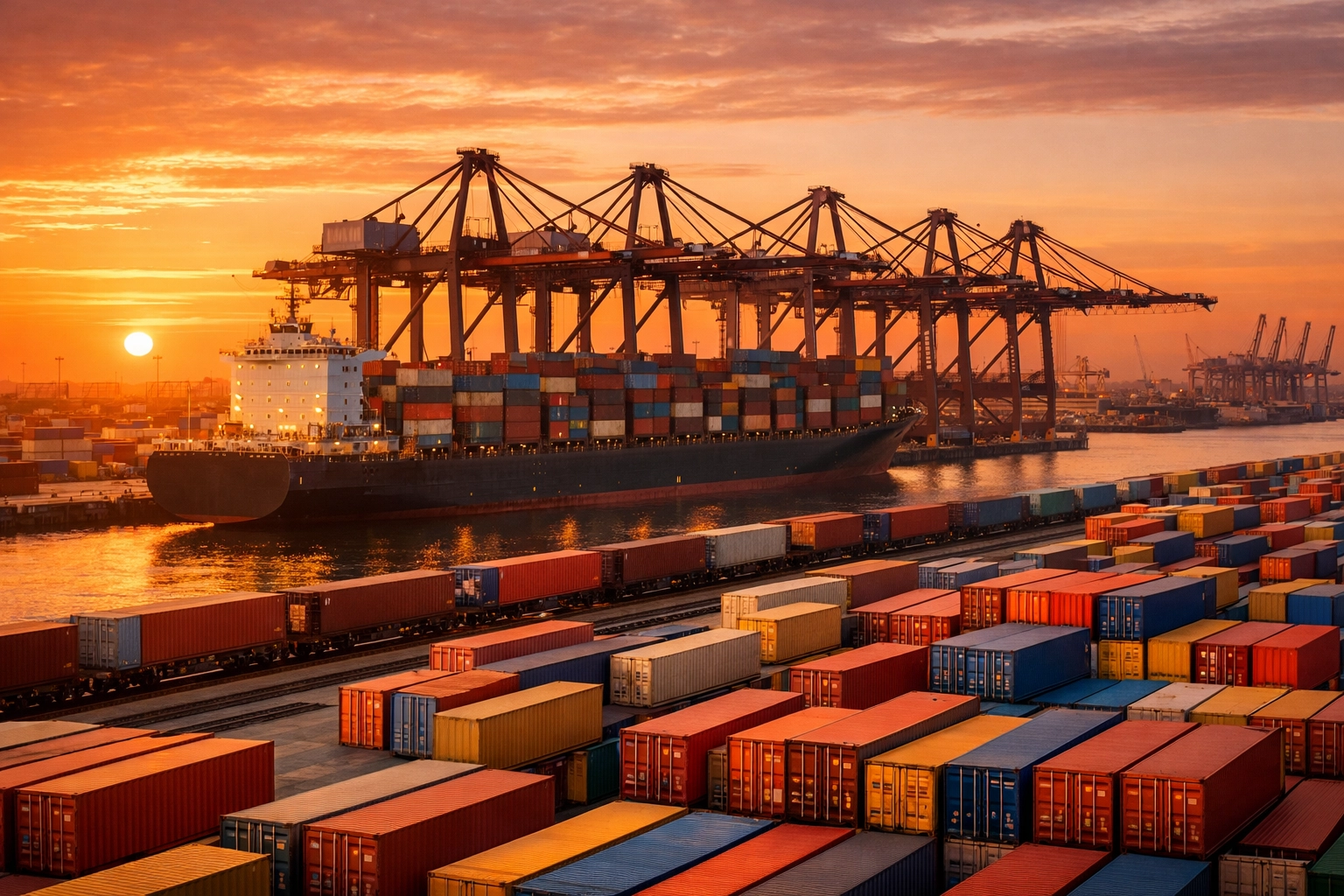
The summit's unique positioning addresses a fundamental gap in the global conference circuit: most logistics events cater to service providers, technology vendors, and consultants seeking clients. The International Commodity Summit does the opposite: it creates an environment where principals negotiate directly with principals. Mine owners connect with battery manufacturers. Agricultural producers meet with international food conglomerates. Energy project developers sit across the table from utilities seeking long-term supply contracts.
What makes this gathering particularly significant for logistics professionals in the commodity space is its international composition. Over 50% of delegates fly in from overseas, representing markets across Europe, Asia, the Middle East, and North America. This isn't a regional networking event: it's a global convergence point where the world's commodity buyers meet Africa's resource producers, with logistics infrastructure and export capability forming the foundation of every conversation.
The summit's structure reflects its deal-making mandate. Rather than broad-topic keynotes about supply chain trends, sessions drill into the specifics: rail-to-port logistics for manganese exports, shipping route optimization for agricultural products, customs clearance protocols for battery minerals, and multimodal transport solutions for landlocked mining operations. These aren't theoretical discussions: they're working sessions where attendees leave with signed memorandums of understanding and term sheets for physical delivery contracts.

For organizations evaluating top logistics conferences in the world, the International Commodity Summit represents the intersection of three critical elements: decision-maker access (executives with authority to sign contracts), deal-focused programming (content structured around transaction completion rather than information sharing), and global reach (an attendee base that spans continents and represents both supply and demand sides of commodity trade). Learn more about the summit's unique approach at internationalcommoditysummit.com.
North American Logistics Powerhouses
Beyond the commodity-specific deal-making environment, North America hosts several major logistics conferences that serve the broader supply chain ecosystem.
TPM26 (March 1-4, Long Beach, California) remains the container shipping industry's flagship event, hosted by the Journal of Commerce. With speakers from DHL, Maersk, and Vespucci Maritime, the conference addresses tariff mitigation strategies and ocean freight optimization. TPM draws approximately 2,500 attendees focused primarily on containerized cargo and port operations: a different audience from bulk commodity exporters but essential for understanding manufactured goods logistics.
MODEX (April 13-16, Atlanta, Georgia) takes a technology and automation angle, bringing together materials handling equipment manufacturers, warehouse automation providers, and distribution center operators. The event attracts over 30,000 attendees, making it one of the largest logistics gatherings in terms of sheer numbers, though the focus skews heavily toward service providers and solution vendors rather than cargo owners or commodity traders.
Gartner Supply Chain Symposium (May 4-6, Orlando, Florida) serves enterprise supply chain executives from major corporations like General Mills, AstraZeneca, and Cisco Systems. With 150+ sessions covering smart manufacturing and cost-to-serve modeling, Gartner draws approximately 1,800 attendees at a senior level, though content focuses on supply chain strategy and technology adoption rather than physical commodity movement or export agreements.
European Logistics Forums
Europe's conference landscape emphasizes intramodal efficiency and technology integration across the continent's complex transport networks.
LogiMAT (Stuttgart, Germany) bills itself as Europe's largest intralogistics exhibition, attracting over 60,000 visitors across four days. The event showcases warehouse equipment, conveyor systems, and automated storage solutions: critical for distribution center operations but less relevant for bulk commodity exporters focused on rail-to-port movements or vessel loading efficiency.
Transport Logistic (Munich, Germany) occurs biennially and represents Europe's broadest logistics gathering, with approximately 60,000 attendees from over 120 countries. The event covers air, rail, road, and sea logistics with a strong emphasis on European Union transport regulation and cross-border freight movement. While comprehensive in scope, the conference caters primarily to logistics service providers (freight forwarders, customs brokers, haulage companies) rather than commodity producers structuring export deals.
Intermodal Europe (Hamburg, Germany) focuses specifically on container logistics and port connectivity, attracting around 3,000 attendees involved in containerized cargo movement. The event serves ocean carriers, terminal operators, and shipping lines but offers limited relevance for bulk commodity sectors like mining, energy, or agricultural exports that typically move via specialized vessels and dedicated port facilities.

Asia-Pacific Trade Corridors
Asia's position as both the world's largest manufacturing hub and fastest-growing consumer market drives a different conference focus: one centered on inbound logistics and last-mile delivery rather than commodity exports.
CeMAT Asia (Shanghai, China) mirrors its German parent event with emphasis on warehousing technology and material handling equipment. Drawing approximately 70,000 visitors, the event primarily serves the Chinese domestic market and regional distribution networks. For African or South American commodity exporters seeking Asian buyers for minerals or agricultural products, the venue offers limited direct engagement with purchasing decision-makers.
LogiSYM (Singapore) positions itself as Southeast Asia's premier supply chain management conference, attracting about 800 attendees focused on regional logistics optimization. While strategically located in a major shipping hub, the conference emphasizes supply chain visibility software, predictive analytics, and regional distribution strategies rather than commodity offtake agreements or bulk export logistics.
Middle Eastern Emerging Platforms
The Middle East has rapidly developed its logistics infrastructure, with conference offerings reflecting the region's ambition to become a global trade hub.
TransMiddle East (Dubai, UAE) brings together approximately 1,500 attendees involved in regional transport and logistics. The event covers road, rail, and port infrastructure developments across the Gulf Cooperation Council countries, with increasing focus on the region's role as a commodity transshipment point between African producers and Asian consumers.
Saudi Logistics Conference (Riyadh, Kingdom of Saudi Arabia) reflects Vision 2030 initiatives to position Saudi Arabia as a logistics corridor connecting three continents. The event attracts 1,200+ attendees with strong government participation and emphasis on infrastructure investment opportunities: relevant for commodity exporters exploring Red Sea shipping routes or considering Saudi Arabia as a strategic logistics base for Asian market access.
Sector-Specific Deep Dives
Beyond geography-based conferences, certain sector-specific logistics events address niche commodity movements.
Breakbulk Events (Houston, Antwerp, Shanghai, and other global cities) focus exclusively on project cargo, heavy-lift shipping, and oversized equipment transport: the specialized logistics required for mining equipment, power generation machinery, and large-scale infrastructure projects. These gatherings typically draw 3,000-5,000 attendees who understand the unique challenges of moving indivisible cargo that doesn't fit standard containers. For mining companies transporting draglines or processing plants, these conferences provide critical connections with specialized carriers and logistics engineers.
Commodity Trading Week (Geneva, Switzerland) approaches logistics from the financial and trading perspective, bringing together commodity traders, banks, and shipping brokers who structure the financial instruments underpinning physical movements. While not a pure logistics conference, the event addresses shipping derivatives, cargo financing, and trade credit: the financial infrastructure that enables commodity logistics.

Making the Strategic Choice
For commodity producers, exporters, mine owners, agricultural enterprises, and energy project developers evaluating top logistics conferences in the world in 2026, the selection criteria differ fundamentally from those applied by logistics service providers or technology vendors.
The question isn't "Where can I learn about supply chain best practices?" but rather "Where can I meet the actual buyers, financiers, and strategic partners who will commit to multi-year offtake agreements?" It's not "Which conference has the most exhibitors?" but "Which gathering puts me in rooms with sovereign wealth funds, government procurement officials, and multinational corporations ready to sign contracts?"
From this perspective, events that prioritize principal-to-principal engagement over vendor-to-customer dynamics become the most valuable investment of executive time. Conferences where over half the attendees represent international markets offer exponentially greater export opportunity than regional gatherings. And summits structured around transaction completion rather than knowledge transfer deliver measurable ROI through executed agreements rather than intangible "networking value."
The evolution of logistics conferences in 2026 reflects a broader shift in global commodity trade: from service-provider-centric events focused on operational efficiency to deal-centric platforms where the physical movement of billions of dollars in commodities gets structured through face-to-face negotiation between principals who have the authority to commit their organizations.
As the global economy increasingly depends on secure, diversified commodity supply chains, the conferences that facilitate direct connections between resource producers and end consumers: with logistics capability and export infrastructure as the enabling foundation: will continue to define where the world's most consequential trade relationships begin. For decision-makers whose mandate extends beyond process optimization to actual market development and revenue generation through physical commodity exports, choosing the right conference platform becomes a strategic imperative that shapes organizational success for years to come.
